WELCOME TO HUMANE IN THE MEMBRANE, LLC!
How It All Started: The Gap I Couldn't Stop Seeing
I want to tell you where HITM actually started, because it wasn't a moment. It was a pattern — the same scene playing out in different rooms, with different titles on my badge, until I couldn't not see it anymore.
I've been an instructional coach sitting across from principals. I've been a network coordinator. I've been a mid-level leader. I've been a director standing in the exact middle of an org chart: the place where the vision from executive leadership was supposed to travel down and become something real for the people doing the work every day. And in every single one of those roles, I watched the same thing happen.
Executive leadership would build the plan. Name the vision. Set the target. And then — and this is the part I need you to sit with — their sense of responsibility would stop there. It wasn't because they didn't care. Somewhere along the way, “creating the plan” got treated as the job, and “making sure people could actually carry it out” got treated as someone else's problem. Usually mine.
So the plan would come down. And the people who were supposed to “increase engagement” or “improve outcomes by x%” — the ones whose Monday mornings the plan was actually about — didn't have the space or the invitation to sit with what it meant for them. What does this look like, day to day? What does it sound like when I'm doing it right? What does it feel like when I'm three weeks in and it's harder than the retreat made it seem? Nobody was asking them those questions.
Nobody was asking on their behalf, either.
I became the translator in the middle. That was the role that kept finding me, over and over, in different buildings under different roles and titles. Help the people on the ground get clear about what they actually had — their resources, their capacity, their real bandwidth — and connect that to what execution required. Then turn around and help the leaders above them get more honest and more specific about what they were asking for.
Not "here's the target." Here's what it means for your people if you're serious about that target. Here's what they'll need. Here's what you'll need to keep building in yourself, as their leader, so you can guide this instead of naming it and walking away.
I've always been the person leading from the middle.
For a long time, I saw that as a weakness. Why wasn't I at the top? Why wasn't I the one setting the vision instead of the one always translating it? Why didn't I want to be? It felt like I was missing something — like being in the middle meant I hadn't arrived yet.
What I eventually learned is that leading from the middle is its own advantage. I always had a place to look ahead and keep moving, keep seeing what was coming. But I also always had someone right there with me — someone to help, someone to support, someone whose hands I could actually see were full. Someone to lead through the uncertainty, to pave an innovative path. The top doesn't always have that. The middle does. (I talk more about this in my YouTube video here: You're Always The person In The Middle
Here's the thing I need to say plainly, because it's the whole reason my work exists.
The plan is not where a leader's responsibility ends. It's where it starts to matter.
Setting a vision and then stepping back until the results come in — good or bad — leaves people to fend for themselves in the space between. And the middle layer– the managers and coaches and team leads who are supposed to hold that space? Their hands are tied. Their resources are constrained. Nobody is building their capacity either. So they absorb the frustration from both directions with almost nothing to work with.
That's the inequity I kept running into. Not that people were failing. I don't believe anyone I've ever worked with wanted to do a bad job. What I believe is that we ask people to carry things we never equipped them to carry, and then we call the outcome a performance problem instead of what it actually is: a resourcing problem, a clarity problem, a leadership-capacity problem that started at the top and never got named there.
So here's where this leaves us.
When I say Humane in the Membrane started because I believe alignment between learning, leadership, and systems changes everything — this is what I mean underneath it. I watched too many good people, at every level of an organization, get left in a gap that wasn't theirs to close. And I got tired of being the only bridge in the room.
A vision without a real path to it isn't a gift to the people carrying it out — it's a weight.
I built HITM because the how has to be as human (and humane) as the why. Transformation was never going to be a moment where everyone gets aligned at a retreat and then goes home. It's a capacity. You build it on purpose, in the people who have to live inside the plan, not just the ones who got to write it.
That's where this began. Not in a single meeting. In every meeting where I stood in the middle and watched the gap open up — and decided I was done just naming it. 💛
Let us know what you think in the comments below!
Join our Humane Blueprint Community Blog Page!
YOU MIGHT ALSO LIKE
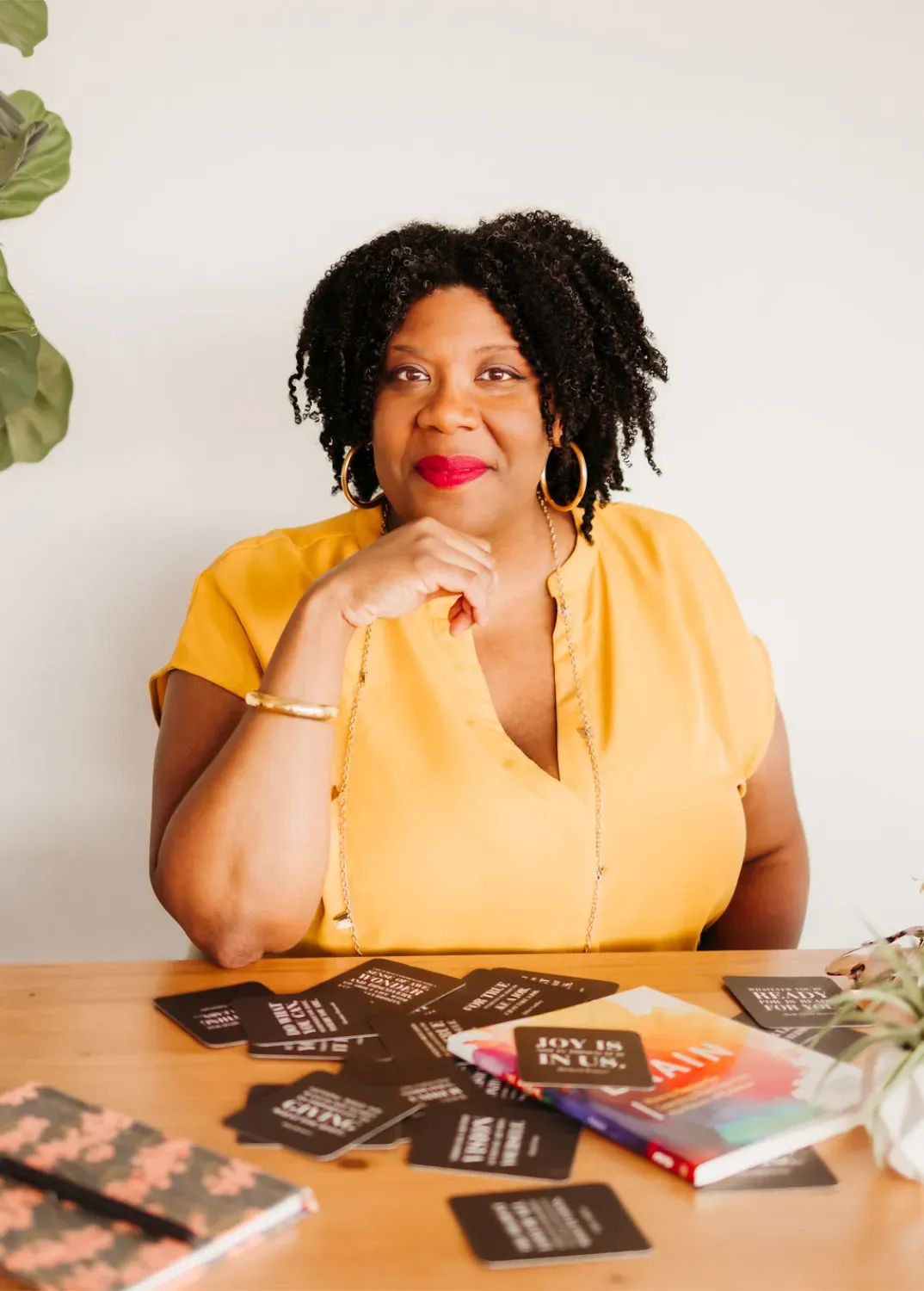
Christina Jones, M.Ed.,Ed.S.
Thank You for Being Here!
Every transformation starts with a single step — and I'm honored you're considering yours with me. Follow along, stay connected, and let's keep building toward what's possible, together.
Where strategy meets heart. 💛




Inspiration in your Inbox!
Get resources, tips, and updates to support your growth in leadership, learning, and systems.
Free Monthly
Newsletter
© 2026 Humane in the Membrane, LLC. All Rights Reserved.